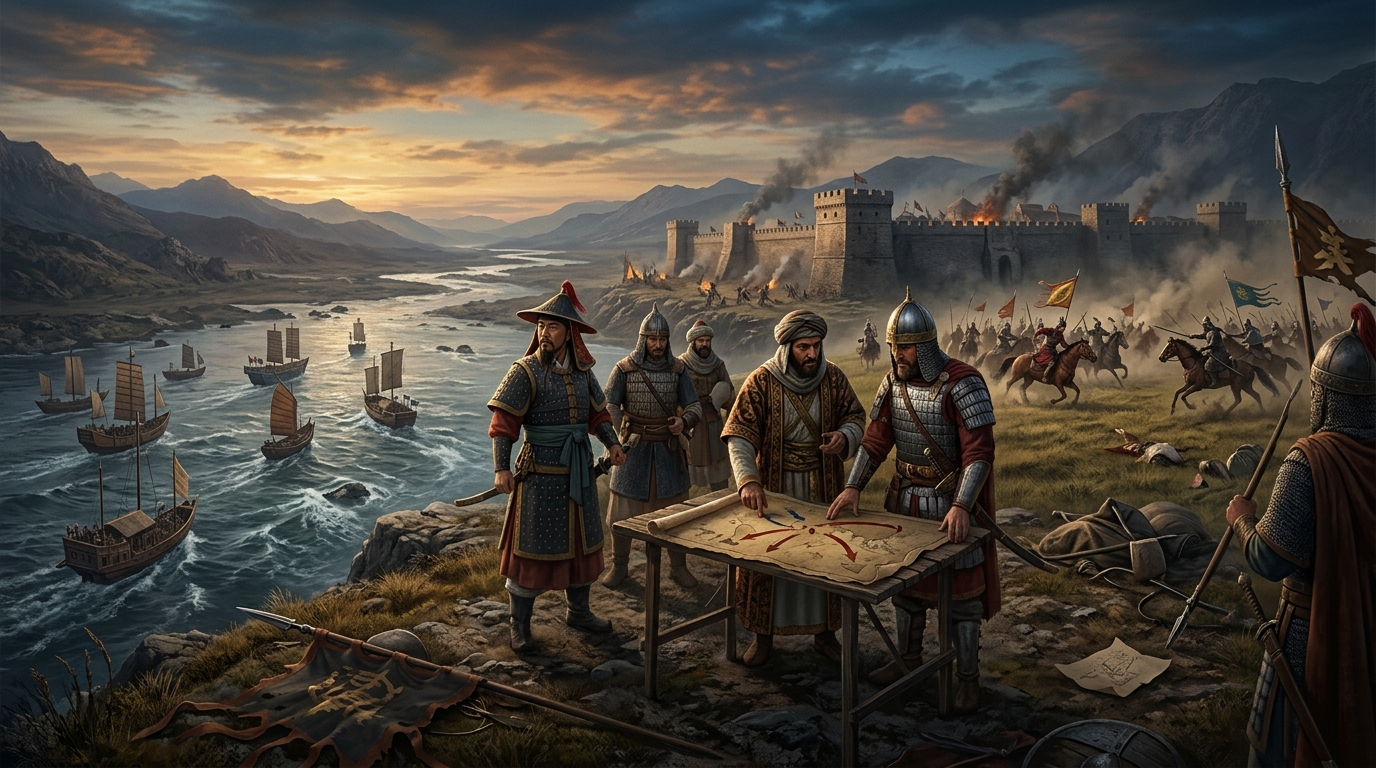
When we reflect on world history, names like Gettysburg, Stalingrad, and Waterloo instantly dominate the narrative. However, numerous critical military engagements remain completely overshadowed by famous conflicts, despite having a far greater impact on the borders, cultures, and languages we know today.
Clashes in the Shadows of Empires
Throughout antiquity and the Middle Ages, powerful forces collided on remote frontiers. These lesser-known conflicts dismantled mighty dynasties and fundamentally altered the geopolitical trajectory of entire continents.
The Battle of Talas: A Strategic Asian Crossroads
In 751 AD, along the banks of the Talas River in modern-day Kazakhstan and Kyrgyzstan, the Arab Abbasid Caliphate faced off against the Chinese Tang Dynasty. This monumental confrontation was the only direct military clash between these two legendary superpowers.
The Unexpected Legacy of Paper
While the battle ended Tang expansion westward, its most profound outcome was cultural rather than territorial. Among the captured Chinese prisoners were skilled artisans who passed the closely guarded secret of papermaking to the Islamic world, accelerating global literacy and knowledge transfer for centuries to come.
The Battle of Yarmouk and the Rise of New Powers
Over a century before Talas, the Byzantine Empire suffered a devastating defeat against the Rashidun Caliphate at Yarmouk in 636 AD. Despite being heavily outnumbered, Muslim forces executed brilliant tactical maneuvers that reshaped the Levant.
A Seismic Shift in Mediterranean Dominance
Yarmouk permanently ended Byzantine rule in Syria and Palestine, opening the gateway for rapid Islamic expansion across North Africa and Spain, radically transforming the Mediterranean world forever.
Turning Points That History Books Missed
Moving closer to the modern era, military operations on land and sea continued to quietly decide the fate of modern nations long before global wars made headlines.
The Battle of Myeongnyang: A Naval Miracle
In 1597, Admiral Yi Sun-sin of Korea faced an overwhelming invasion force of over 130 Japanese warships with a fleet of just 13 ships. Harnessing dangerous tidal currents and narrow strait geography, Yi executed one of the greatest naval victories in human history.
Preserving Sovereignty Against All Odds
The miraculous victory at Myeongnyang shattered Japanese morale and effectively ended their attempts to conquer East Asia during the Imjin War, protecting the cultural identity and independence of the Joseon Kingdom.
The Siege of Vienna in 1529
While the 1683 Battle of Vienna receives widespread attention, the first Ottoman siege in 1529 was the true decisive moment where European history hung by a thread. Bad weather and fierce resistance forced Sultan Suleiman the Magnificent to retreat, marking the absolute limit of Ottoman expansion into Central Europe and setting the stage for the modern European balance of power.







Leave a Reply