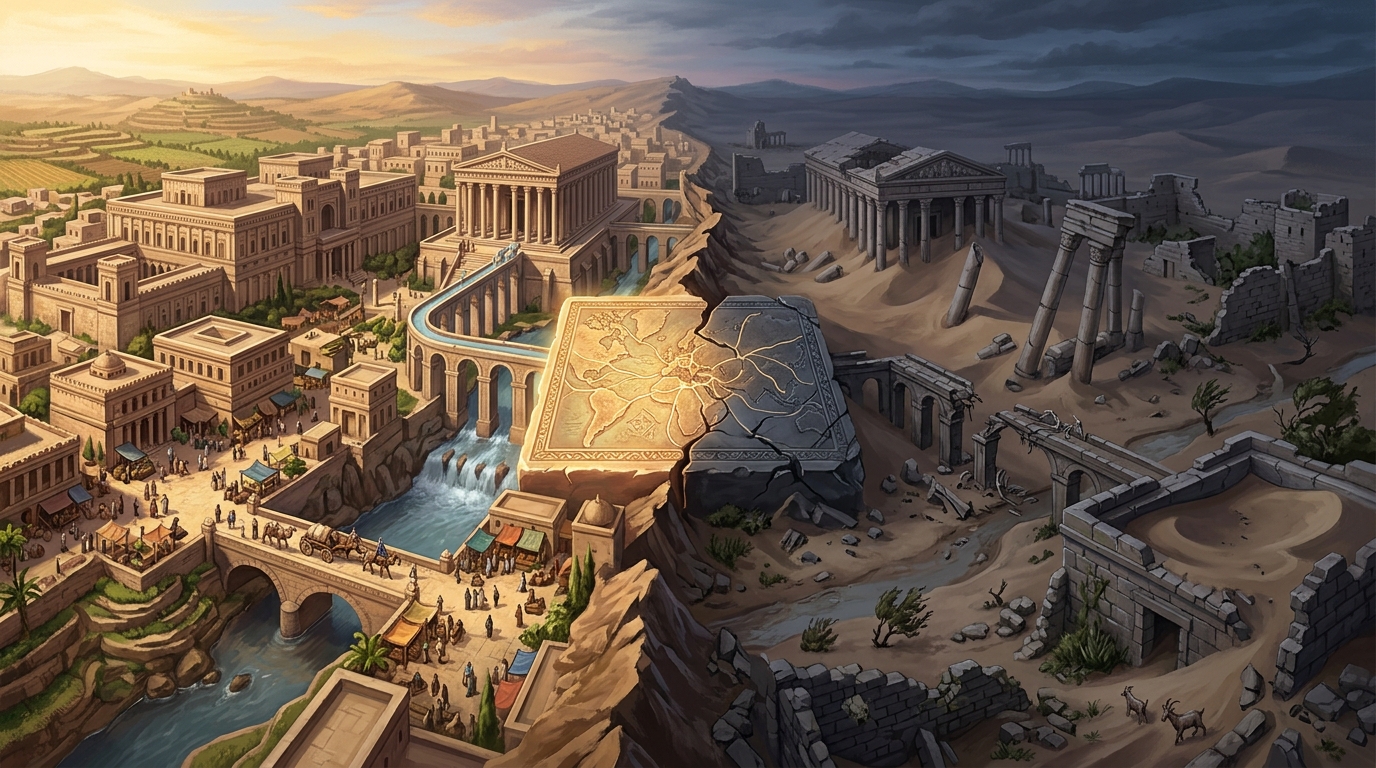
Sprawling stone metropolises once thrived as vibrant centers of trade, culture, and power, only to be completely deserted by their inhabitants. From the jungle-shrouded temples of Angkor to the majestic stone towers of Great Zimbabwe, the cycle of rapid urban growth followed by total abandonment remains one of history’s most captivating puzzles.
The Catalysts Behind Ancient Urbanization
Ancient peoples did not construct massive cities on a whim. The decision to settle and build grand urban centers was driven by critical survival advantages, strategic trade locations, and powerful spiritual imperatives.
Agricultural Booms and Sacred Geography
The rise of early metropolises usually began with agricultural breakthroughs. Rich river valleys provided fertile soil, allowing small farming communities to produce excess food, support growing populations, and build permanent infrastructure.
Alignment with the Gods
Many ancient cities were deliberately placed at sites considered spiritually significant. Kings and high priests designed urban layouts to align with astronomical events, creating monumental spaces that served as religious epicenters and bolstered royal authority.
Strategic Crossroads of Trade
Location was everything for ancient urban planners. Cities like Petra and Palmyra flourished because they sat directly along lucrative trade routes, accumulating immense wealth by controlling the flow of spices, silk, and precious metals.
Engineering Feats That Enabled Growth
To sustain thousands of residents, ancient engineers constructed brilliant water management systems. Aqueducts, massive reservoirs, and complex canals turned arid landscapes into thriving oases, enabling populations to concentrate in unprecedented numbers.
The Triggers of Sudden Collapse
Despite their advanced technology and cultural triumphs, even the grandest cities proved vulnerable to internal pressures and environmental shifts. When key systems failed, collapse often followed with shocking speed.
Environmental Degradation and Climate Shifts
Severe, prolonged droughts frequently delivered the final blow to vulnerable urban centers. The classic Maya civilization, for instance, suffered series of devastating droughts that crippled agricultural output and rendered vast reservoir systems useless.
Overexploitation of Local Resources
In many cases, cities brought about their own downfall through environmental mismanagement. Deforestation for construction and fuel led to severe soil erosion, stripping the surrounding land of its ability to feed the urban population.
Shifts in Trade and Political Instability
When trade routes naturally shifted or naval routes replaced overland tracks, once-wealthy cities lost their economic purpose almost overnight. Combined with political corruption, civil unrest, or foreign invasions, maintaining complex infrastructure became impossible, leaving residents with no choice but to disperse back into rural life.






Leave a Reply