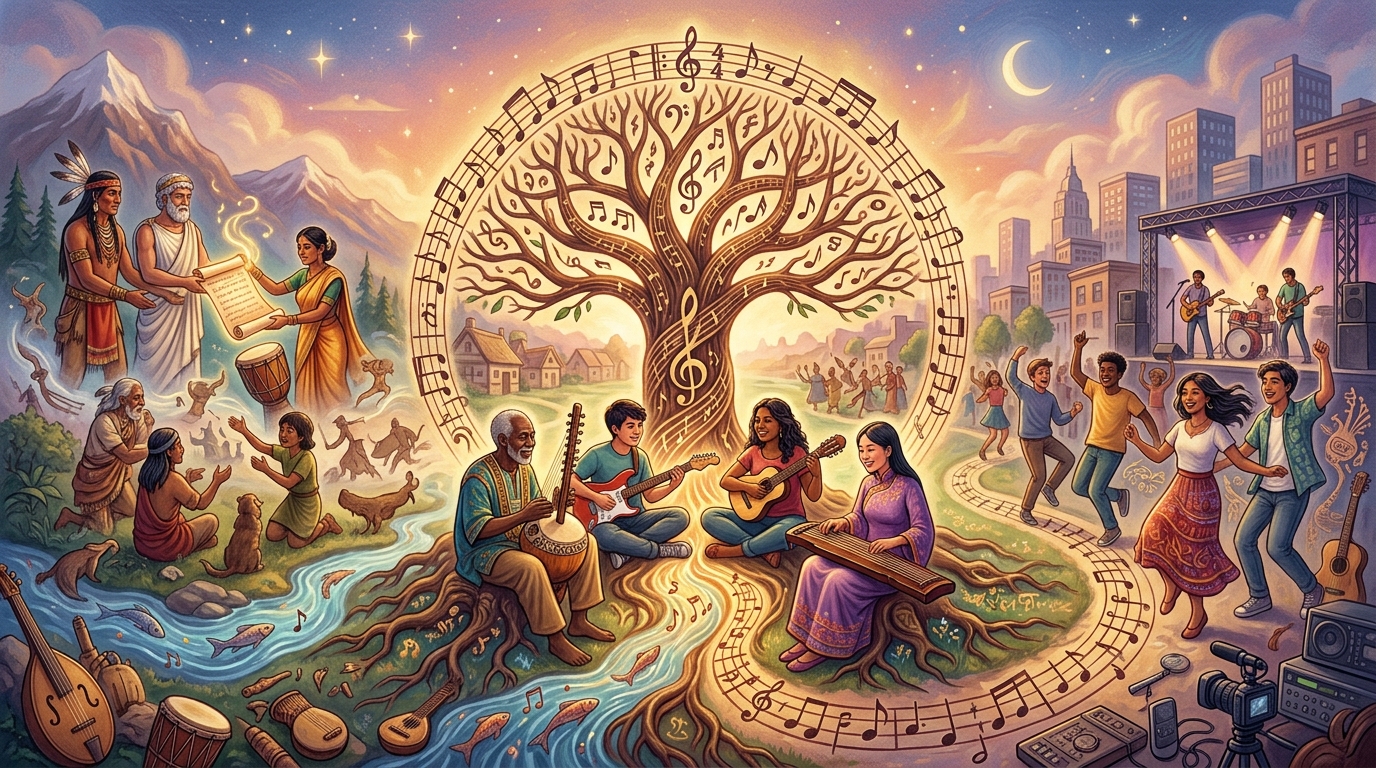
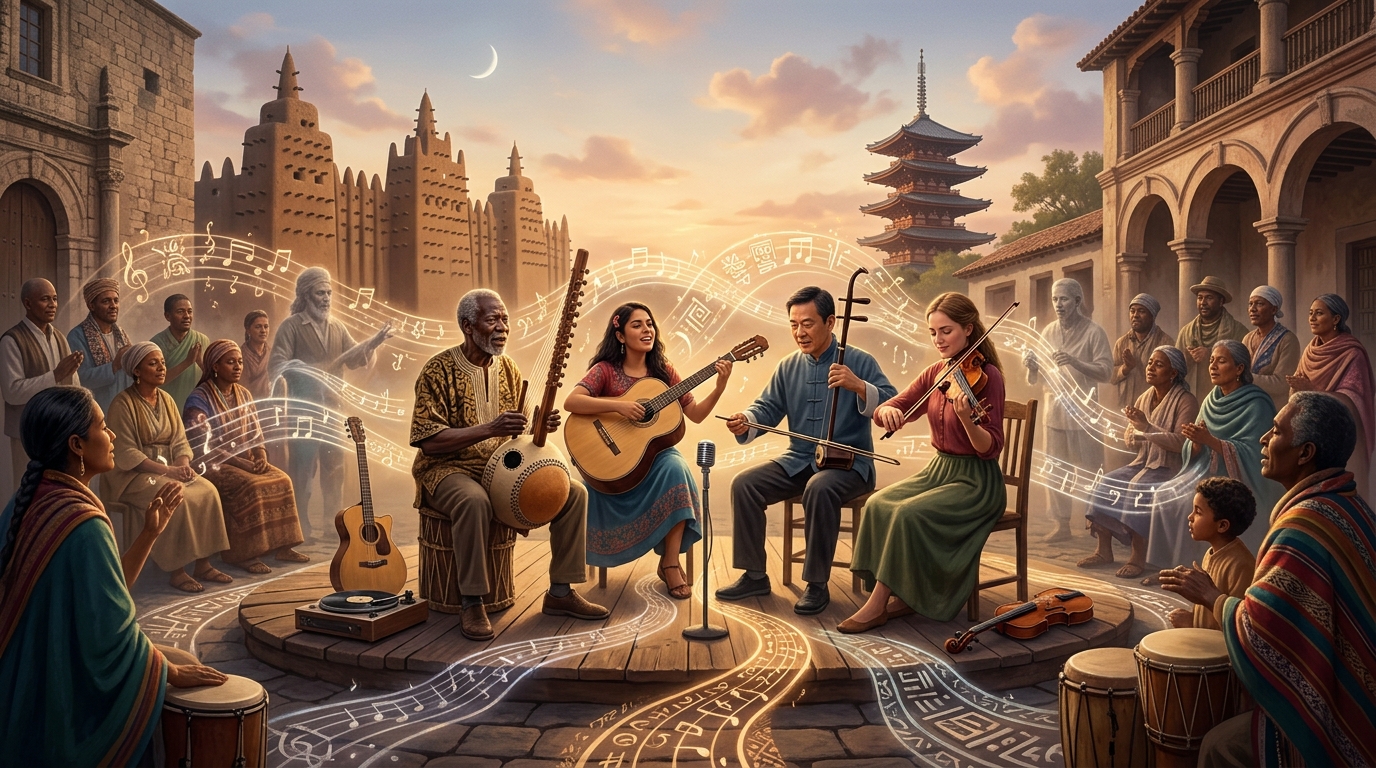
Long before written history recorded the lives of our ancestors, melodies and rhythms served as the primary vault for human experience. Music carries emotional weight, oral tradition, and historical truth across generations, ensuring that a community’s identity remains vibrant even through immense global change.
The Soundtracks of Human History
Music functions as a living archive, capturing pivotal historical moments, social movements, and daily life in ways that static textbooks cannot match. Songs preserve dialect, archaic vocabulary, and unique worldviews that might otherwise fade from memory.
Oral Traditions and Folk Storytelling
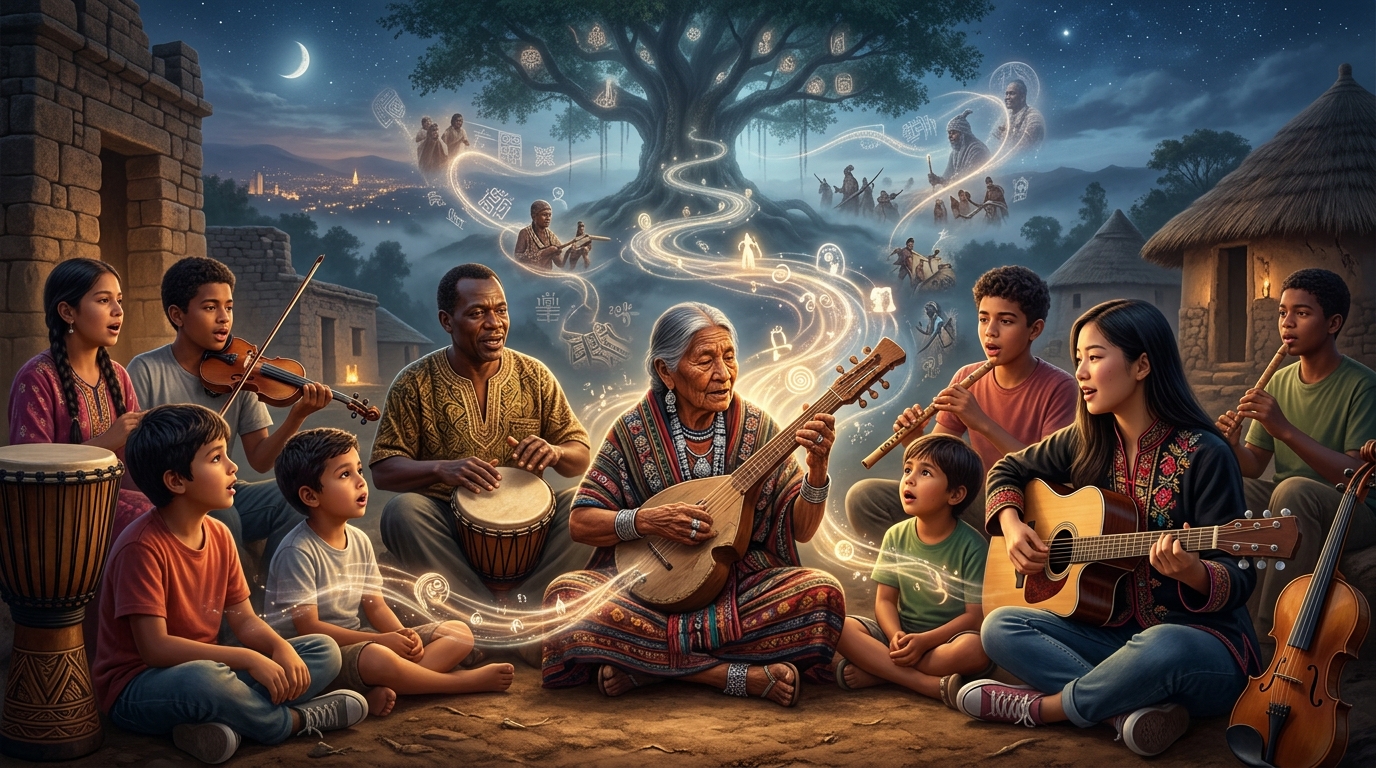
In many Indigenous and traditional societies, history is explicitly passed down through song rather than written text. Folk ballads and rhythmic chants document migrations, battles, environmental wisdom, and ancestral lineages with incredible accuracy.
Melodic Memory Tricks
Scientists and linguists note that rhythm and rhyme act as powerful cognitive anchors. By setting complex histories to music, ancient societies ensured that essential cultural knowledge could be easily memorized, recalled, and transmitted without losing its core message over centuries.
Instruments as Cultural Artifacts
Beyond lyrics, the physical instruments themselves hold rich historical narratives. Traditional instruments are built from native woods, animal skins, and local materials, directly linking a culture’s musical soundscape to its geographical environment.
Craftsmanship and Sonic Heritage
When artisans handcraft instruments like the West African kora, the Andean charango, or the Gaelic bodhrán, they preserve ancient engineering techniques. Passing these construction secrets down ensures that the authentic, distinct sound of a culture remains intact.
Resisting Assimilation and Preserving Identity
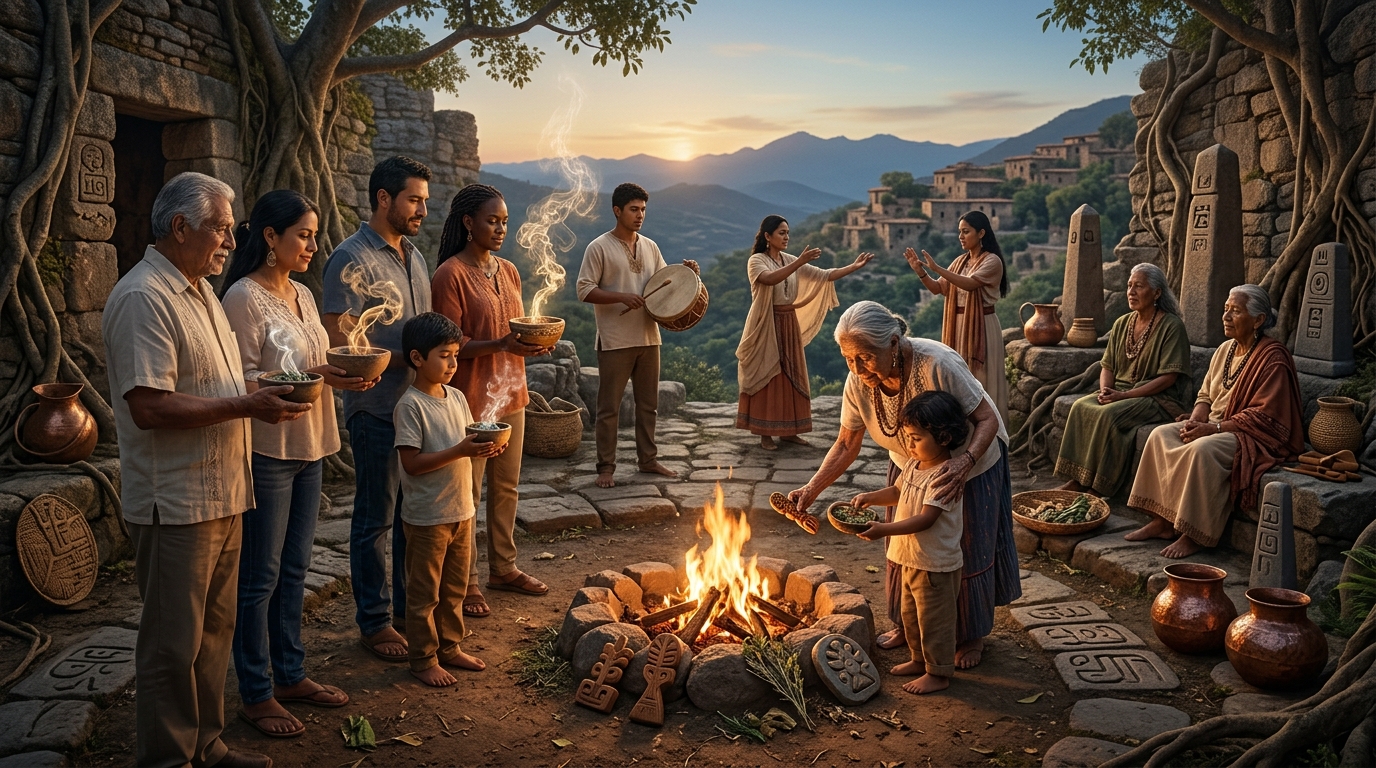
Throughout history, marginalized and displaced groups have weaponized music as a tool for survival, using melody to maintain identity in the face of forced assimilation or exile.
Songs of Resilience and Unity
During times of oppression, music creates a shared space for unity and silent resistance. Spirituals, protest songs, and folk anthems allow communities to process collective trauma while keeping hope and cultural pride burning brightly.
Evolving Melodies in the Modern World
Today, young musicians blend traditional folk instruments with modern genres like hip-hop, electronic, and pop. This innovative fusion keeps ancestral sounds relevant for younger generations, proving that cultural memory is not a static museum piece, but a living, evolving force.



Leave a Reply